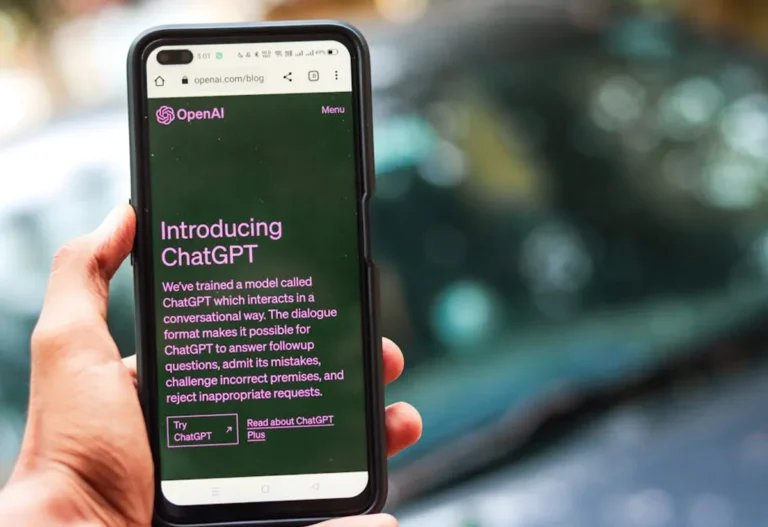

Selecting an AI chat app involves more than just identifying a platform; it requires a granular understanding of the features that directly impact operational efficiency, customer satisfaction, and ultimately, revenue. The market offers a broad spectrum of solutions, from foundational chatbots designed for basic FAQs to sophisticated conversational AI systems capable of complex task automation and personalized user journeys. For marketers, site owners, and agencies, the decision hinges on identifying which core capabilities align with specific business objectives, user interaction patterns, and integration requirements. Overlooking critical features can lead to a system that underperforms, alienates users, or creates more overhead than it saves. This guide breaks down the essential features to prioritize, ensuring that your investment in conversational AI yields measurable commercial returns.
Evaluating AI Chat App Features for Commercial Impact
Before diving into specific features, establish a clear framework for evaluation. Consider your primary use cases: Is it customer support, lead generation, internal knowledge management, or a blend? What is the expected volume of interactions, and what level of complexity will those interactions entail? A feature that is critical for a high-volume e-commerce support bot might be overkill for a simple informational assistant. Prioritize features that directly address your most pressing business challenges and offer a clear path to ROI, whether through reduced operational costs, increased conversion rates, or improved customer loyalty. Assess each feature not just for its presence, but for its depth, configurability, and how seamlessly it integrates into your existing technology stack and workflow.
1. Contextual Understanding and Natural Language Processing (NLP)
This feature underpins the entire conversational experience. Advanced NLP allows the AI to not just recognize keywords but to interpret user intent, understand nuances, handle synonyms, and follow conversational threads over multiple turns. Without robust contextual understanding, the chat app becomes a rigid decision tree, frustrating users with irrelevant responses and frequent escalations. A high-performing NLP engine can differentiate between "I want to return an item" and "What is your return policy," leading to more accurate and helpful interactions.
Best for: Any application requiring nuanced, human-like conversations, complex query resolution, or reduced human agent intervention. Essential for customer service, technical support, and sophisticated lead qualification.
Pros: Significantly improves user satisfaction by providing relevant, accurate responses; reduces the need for human agent intervention; enables complex task completion directly within the chat interface; adapts to varied user phrasing.
Cons: Requires extensive training data and ongoing refinement to maintain accuracy; initial setup and tuning can be time-consuming; poor implementation leads to frustrating "I don't understand" loops.
Verdict: Non-negotiable for any AI chat app aiming to provide a genuinely intelligent and helpful user experience. A weak NLP core renders other advanced features less effective.
2. Integration Ecosystem
An AI chat app rarely operates in isolation. Its value is amplified by its ability to seamlessly connect with existing business systems, including CRM platforms (e.g., Salesforce, HubSpot), e-commerce platforms (e.g., Shopify, Magento), helpdesk software (e.g., Zendesk, Intercom), and internal databases. These integrations allow the bot to retrieve and update customer information, process orders, check statuses, and personalize interactions based on real-time data. Without robust integration capabilities, the bot is limited to generic responses, often requiring users to repeat information or switch channels.
Best for: Businesses with established tech stacks seeking to automate processes, personalize interactions, and provide real-time data access to users or agents. Critical for e-commerce, customer service, and sales support.
Pros: Enables end-to-end automation of complex workflows; provides personalized, data-driven responses; eliminates data silos and reduces manual data entry; improves efficiency for both users and agents.
Cons: Integration complexity can vary, potentially requiring developer resources; maintaining integrations with evolving APIs can be an ongoing task; security implications must be carefully managed.
Verdict: A foundational requirement for any commercially viable AI chat app. The depth and breadth of its integration capabilities directly correlate with its ability to drive tangible business value beyond simple FAQ delivery.
3. Customization and Branding
The chat interface and conversational tone should reflect your brand identity. This feature allows for extensive customization of the chat widget's appearance (colors, fonts, avatar, placement), as well as the bot's persona and language style. A generic, off-brand chat experience can feel impersonal and detract from the overall user journey. Customization ensures a consistent brand experience across all touchpoints, building trust and reinforcing your brand's voice, whether it's formal, friendly, or playful.
Best for: Brands prioritizing a cohesive user experience and strong brand identity across all digital channels. Important for customer-facing applications where brand perception is key.
Pros: Reinforces brand identity and professionalism; enhances user trust and engagement; allows the bot to sound and look like a natural extension of your brand; improves user adoption rates.
Cons: Over-customization can sometimes lead to complex maintenance; design choices need careful consideration to ensure usability; requires design and branding guidelines to be clearly defined.
Verdict: Essential for maintaining brand consistency and delivering a professional, integrated user experience. Beyond aesthetics, it contributes to user comfort and willingness to interact.
4. Scalability and Reliability
An AI chat app must be able to handle fluctuating user demand without performance degradation. Scalability ensures that the system can manage a sudden surge in concurrent users during peak seasons, marketing campaigns, or unexpected events. Reliability refers to the system's uptime and consistent performance, preventing frustrating delays or crashes. Downtime or slow response times directly impact user satisfaction and can lead to lost conversions or increased support costs. Look for solutions built on robust infrastructure with documented uptime SLAs and auto-scaling capabilities.
Best for: Businesses with variable or high traffic volumes, especially e-commerce, large enterprises, and service providers where consistent availability is paramount.
Pros: Ensures continuous service availability; prevents performance bottlenecks during peak demand; maintains user satisfaction through fast response times; protects revenue streams by avoiding service interruptions.
Cons: High scalability often comes with a higher cost; requires sophisticated infrastructure and monitoring; can be challenging to test thoroughly under extreme load conditions.
Verdict: A critical operational feature. An AI chat app that cannot scale or maintain reliability under pressure will quickly become a liability, regardless of its other intelligent capabilities.
5. Security and Data Privacy Compliance
Handling user data, especially sensitive personal or financial information, requires stringent security measures and adherence to privacy regulations (e.g., GDPR, CCPA, HIPAA). This feature encompasses data encryption (in transit and at rest), secure authentication protocols, access controls, and robust data governance policies. Compliance capabilities ensure that the chat app processes data legally and ethically, protecting both your users and your business from legal repercussions and reputational damage. Look for certifications and clear documentation of security practices.
Best for: All businesses, but particularly those operating in regulated industries (healthcare, finance) or handling sensitive customer data. Non-negotiable for maintaining trust and avoiding legal penalties.
Pros: Protects sensitive user and business data; ensures compliance with global data privacy regulations; builds user trust and confidence; mitigates legal and reputational risks.
Cons: Implementing and maintaining high security standards can be complex and costly; requires ongoing vigilance against evolving cyber threats; compliance can add overhead to development and operations.
Verdict: A fundamental, non-negotiable feature. Compromised security or non-compliance can severely undermine trust and lead to significant financial and reputational damage, outweighing any benefits of the AI chat app.
6. Multichannel Deployment
Users interact with businesses across various platforms: websites, mobile apps, social media (Facebook Messenger, WhatsApp), and even SMS. A robust AI chat app offers the flexibility to deploy the same conversational AI across multiple channels, providing a consistent experience regardless of where the user initiates contact. This avoids fragmented support experiences and allows businesses to meet customers on their preferred platforms, increasing accessibility and convenience. Centralized management of bot responses across channels simplifies updates and ensures consistency.
Best for: Businesses with a diverse digital presence and a need to provide unified customer experiences across multiple touchpoints. Ideal for e-commerce, customer service, and marketing campaigns.
Pros: Provides a consistent user experience across platforms; expands reach and accessibility to customers; centralizes bot management and content updates; improves operational efficiency by reusing bot logic.
Cons: Managing channel-specific nuances (e.g., character limits, media support) can add complexity; requires careful testing across all deployed channels; integration with various social media APIs can be challenging.
Verdict: Increasingly vital for modern customer engagement. A truly effective AI chat app extends its intelligence beyond a single website widget to encompass the full spectrum of user interaction channels.
7. Analytics and Reporting Dashboards
To optimize performance and demonstrate ROI, an AI chat app must provide comprehensive analytics and reporting. This includes metrics such as conversation volume, user satisfaction (e.g., CSAT scores), resolution rates, escalation rates, popular queries, bot accuracy, and user pathways. Detailed dashboards allow marketers and site owners to identify common pain points, measure the effectiveness of bot responses, and pinpoint areas for improvement. Without these insights, optimizing the bot's performance becomes a guessing game.
Best for: All users seeking to measure, optimize, and justify their investment in AI chat technology. Essential for continuous improvement and demonstrating commercial value.
Pros: Provides actionable insights for bot optimization; quantifies ROI and operational savings; identifies user pain points and content gaps; supports data-driven decision-making for bot development.
Cons: Raw data often requires interpretation and analysis; dashboards can be complex if not well-designed; sometimes requires integration with external analytics platforms for a holistic view.
Verdict: Crucial for continuous improvement and demonstrating tangible business impact. A chat app without robust analytics is a black box, making it impossible to refine and optimize its performance effectively.
8. Human Agent Handoff and Hybrid AI
Even the most advanced AI chat apps cannot resolve every query. The ability to seamlessly hand off a conversation to a human agent, along with the full conversation history and relevant context, is critical. This hybrid AI approach ensures that users always have a path to resolution, preventing frustration when the bot reaches its limits. Features like live chat integration, ticket creation, and context transfer empower agents to pick up exactly where the bot left off, improving efficiency and customer satisfaction.
Best for: Customer service, sales, and technical support scenarios where complex issues or emotional interactions necessitate human intervention. Essential for maintaining high customer satisfaction.
Pros: Prevents user frustration and abandonment; ensures complex issues are resolved effectively; optimizes human agent time by handling routine queries; provides a safety net for bot limitations.
Cons: Requires careful integration with existing live chat or helpdesk systems; defining clear handoff triggers can be challenging; can increase operational costs if not managed efficiently.
Verdict: A mandatory feature for any AI chat app designed for customer-facing roles. It acknowledges the limitations of AI and ensures a smooth transition to human support when necessary, preserving the user experience.
9. Knowledge Base and Dynamic Content Integration
An AI chat app's intelligence is only as good as the information it can access. Integration with a centralized knowledge base (e.g., FAQs, articles, product documentation) allows the bot to pull accurate, up-to-date information dynamically. This ensures consistent responses and reduces the effort required to manually update bot content. The ability to integrate with dynamic content sources means the bot can provide real-time information, such as current promotions, inventory levels, or shipping updates, without constant manual input.
Best for: Businesses with extensive documentation, frequently updated information, or a need to provide real-time data to users. Ideal for customer support, technical documentation, and product information.
Pros: Ensures accuracy and consistency of information; reduces manual content management for the bot; provides real-time data access to users; improves self-service resolution rates.
Cons: Requires a well-structured and maintained knowledge base; integration complexity can vary; potential for outdated information if the knowledge base is not kept current.
Verdict: Highly valuable for maintaining the bot's relevance and accuracy. It transforms the chat app from a static responder to a dynamic information retrieval system, enhancing its utility significantly.
10. Personalization and User Journey Mapping
Moving beyond generic responses, personalization allows the AI chat app to tailor interactions based on user history, preferences, demographics, and current browsing behavior. This might involve remembering past conversations, greeting returning users by name, recommending products based on previous purchases, or guiding users through specific stages of a sales funnel. User journey mapping capabilities enable the bot to understand where a user is in their interaction with the business and provide relevant, proactive assistance, leading to higher engagement and conversion rates.
Best for: E-commerce, sales, marketing, and customer retention strategies where tailored experiences drive engagement and conversions. Crucial for building long-term customer relationships.
Pros: Creates highly relevant and engaging user experiences; increases conversion rates and customer loyalty; reduces friction in the user journey; makes interactions feel more human and less transactional.
Cons: Requires access to user data, raising privacy considerations; implementing complex personalization logic can be challenging; over-personalization can sometimes feel intrusive if not handled carefully.
Verdict: A key differentiator for advanced AI chat apps. Personalization elevates the user experience from transactional to relational, driving deeper engagement and measurable business outcomes.
11. Proactive Engagement Triggers
Instead of waiting for a user to initiate a conversation, proactive engagement allows the AI chat app to intelligently start interactions based on predefined triggers. These triggers can include time spent on a page, specific page views, items in a shopping cart, or exit intent. For example, a bot might offer assistance if a user lingers on a pricing page or shows signs of abandonment. This feature can significantly improve lead generation, reduce cart abandonment, and provide timely support, converting passive browsing into active engagement.
Best for: Sales, lead generation, and customer support for e-commerce and service-based websites looking to convert visitors proactively. Effective for reducing bounce rates and improving conversions.
Pros: Increases user engagement and conversion rates; reduces cart abandonment; provides timely assistance to users who might be struggling; captures leads proactively.
Cons: Poorly implemented triggers can be intrusive or annoying; requires careful testing to optimize timing and messaging; can increase bot interaction volume, requiring robust backend.
Verdict: A powerful feature for driving specific business outcomes. When implemented thoughtfully, proactive engagement transforms the chat app from a reactive tool into a proactive sales and support assistant.
12. Multilingual Support
For businesses operating in global markets or serving diverse populations, multilingual support is essential. This feature enables the AI chat app to understand and respond in multiple languages, automatically detecting the user's language or allowing them to select their preference. This expands your reach, improves accessibility for non-native speakers, and provides a more inclusive user experience. Look for robust translation capabilities and the ability to manage localized content for different languages.
Best for: Global businesses, international e-commerce, and organizations serving diverse linguistic communities. Crucial for expanding market reach and providing equitable service.
Pros: Expands market reach and customer base; improves accessibility and user satisfaction for diverse audiences; provides a localized and inclusive experience; reduces the need for human agents fluent in multiple languages.
Cons: Translation quality can vary, especially for nuanced or domain-specific language; requires careful management of multilingual content and training data; can increase complexity and cost.
Verdict: A critical feature for international operations. Multilingual support ensures that your AI chat app can effectively serve a global audience, directly impacting market penetration and customer loyalty.
13. Sentiment Analysis
Beyond understanding what a user says, sentiment analysis allows the AI chat app to interpret the emotional tone of their message (e.g., positive, negative, neutral, frustrated, angry). This insight is invaluable for prioritizing support requests, routing conversations to appropriate human agents (e.g., a highly frustrated customer to a senior agent), and adapting the bot's response strategy. Recognizing negative sentiment early can prevent escalations and improve service recovery efforts, while positive sentiment can be leveraged for upselling or feedback collection.
Best for: Customer service and support operations where understanding user emotion is crucial for effective resolution and satisfaction. Useful for identifying at-risk customers.
Pros: Identifies and prioritizes distressed customers; allows for adaptive bot responses based on emotional state; improves human agent efficiency by providing emotional context; enhances customer satisfaction by addressing underlying sentiment.
Cons: Accuracy can be challenging, especially with sarcasm or subtle language; requires robust NLP capabilities; misinterpreting sentiment can lead to inappropriate responses.
Verdict: A powerful enhancement for customer-centric AI chat apps. Sentiment analysis adds a layer of emotional intelligence, enabling more empathetic and effective interactions, particularly in high-stakes support scenarios.
14. No-Code/Low-Code Bot Builder
For marketers, site owners, and non-technical teams, the ability to build, modify, and manage the AI chat app without extensive coding knowledge is a significant advantage. A no-code or low-code bot builder provides intuitive visual interfaces, drag-and-drop functionalities, and pre-built templates, empowering business users to create and iterate on conversational flows quickly. This reduces reliance on development teams, accelerates deployment, and allows for agile adjustments based on performance data, making the AI chat app more accessible and adaptable.
Best for: Small to medium businesses, marketing teams, and agencies seeking rapid deployment, easy iteration, and reduced reliance on developer resources. Ideal for those without dedicated AI development teams.
Pros: Accelerates bot development and deployment; empowers business users to manage and optimize conversations; reduces development costs and time to market; fosters agile iteration and experimentation.
Cons: May have limitations for highly complex or unique conversational requirements; can still require some understanding of conversational design principles; vendor lock-in can be a concern.
Verdict: Highly beneficial for democratizing AI chat app development and management. It lowers the barrier to entry, enabling faster iteration and greater control for business stakeholders.
Measuring Success and Selecting the Right AI Chat App
Once you've identified the critical features, the next step is to establish clear metrics for success. Key performance indicators (KPIs) might include: bot resolution rate (percentage of queries resolved without human intervention), average handling time reduction, customer satisfaction (CSAT) scores for bot interactions, lead qualification rates, conversion rates (for sales-oriented bots), and cost savings from reduced human agent workload. Pilot programs with a subset of users or specific use cases can provide valuable real-world data before a full rollout. When selecting a provider, look beyond the feature list to evaluate their support, documentation, and commitment to ongoing development. A strong vendor partnership, coupled with a feature set precisely aligned with your commercial objectives, will be the foundation of a successful AI chat app implementation. Understanding how AI chat tools fit into the broader landscape will help you make a more strategic choice for your business.
Frequently Asked Questions About AI Chat App Features
What is the most important feature for a customer service AI chat app?
For customer service, Contextual Understanding and Natural Language Processing (NLP) is paramount, as it directly impacts the bot's ability to accurately understand and respond to diverse customer queries. This is closely followed by Human Agent Handoff, ensuring complex issues are always resolved.
How can AI chat app features help with lead generation?
Features like Proactive Engagement Triggers can initiate conversations with potential leads based on their website behavior. Personalization and User Journey Mapping can then guide them through a qualification process, while Integration Ecosystem capabilities can push qualified leads directly into your CRM.
Is multilingual support a necessary feature for all businesses?
Multilingual support is crucial for businesses with a global customer base or those serving diverse linguistic communities. If your audience primarily speaks one language, other features might take higher priority, but it's a key consideration for market expansion.
What role do analytics play in optimizing an AI chat app?
Analytics and Reporting Dashboards are essential for continuous improvement. They provide data on bot performance, user behavior, common queries, and areas of frustration, allowing you to refine conversational flows, improve responses, and demonstrate the app's commercial value.
How important is security and data privacy for an AI chat app?
Security and Data Privacy Compliance are non-negotiable for any AI chat app, especially those handling personal or sensitive information. Failure in this area can lead to severe legal penalties, loss of customer trust, and significant reputational damage.